
Electric scooters have become a convenient mode of transportation across California cities, offering an eco-friendly and accessible way to move through busy streets. Companies like Lime, Bird, and Spin have capitalized on this demand, placing thousands of dockless scooters in public areas for short-term use. However, their convenience does not come without risks. As the number of users has surged, so have reports of injuries and accidents. With these incidents on the rise, the question becomes increasingly relevant: are scooter rental companies liable for accidents in California?
Understanding scooter company liability in California involves examining state traffic laws, company policies, and the role of user agreements. Each accident involves a unique set of facts, and liability depends heavily on those details. Nonetheless, certain patterns are emerging in how courts and injured parties are navigating these claims.
Legal Framework Governing Scooter Accidents in California
California classifies electric scooters as motorized vehicles, and riders are subject to many of the same rules as drivers of motor vehicles. Helmets are required for riders under 18, and scooters must not be operated on sidewalks. These rules play a central role when determining fault in a collision.
A key legal question in these situations is whether the rental company can be held accountable. The answer depends on a range of factors, including the condition of the scooter, how it was deployed, and whether users were properly warned of any defects.
If a scooter malfunctions due to poor maintenance, the company may face liability under California’s product liability and negligence laws. For example, if a brake fails or the throttle sticks due to a known issue that wasn’t repaired, the injured rider may have grounds for a claim. These legal concepts are critical when building a case around scooter company liability in California.
The Role of User Agreements and Disclaimers
One barrier to holding rental companies accountable is the user agreement that every rider must accept before activating a scooter. These digital contracts often contain language that shifts responsibility to the rider, including waivers of liability and arbitration clauses.
Although these agreements are generally enforceable, they do not provide blanket protection for rental companies. California law does not allow companies to waive liability for gross negligence or for violations of public policy. If a company knowingly allows dangerous or defective scooters on the street, the user agreement may not shield them from legal action.
Riders should be aware that these contracts are usually written in dense legalese and can contain provisions that limit options after an injury. That’s why examining the agreement is a crucial step in any personal injury case involving a scooter accident.
Common Scenarios Where Liability May Be Assigned
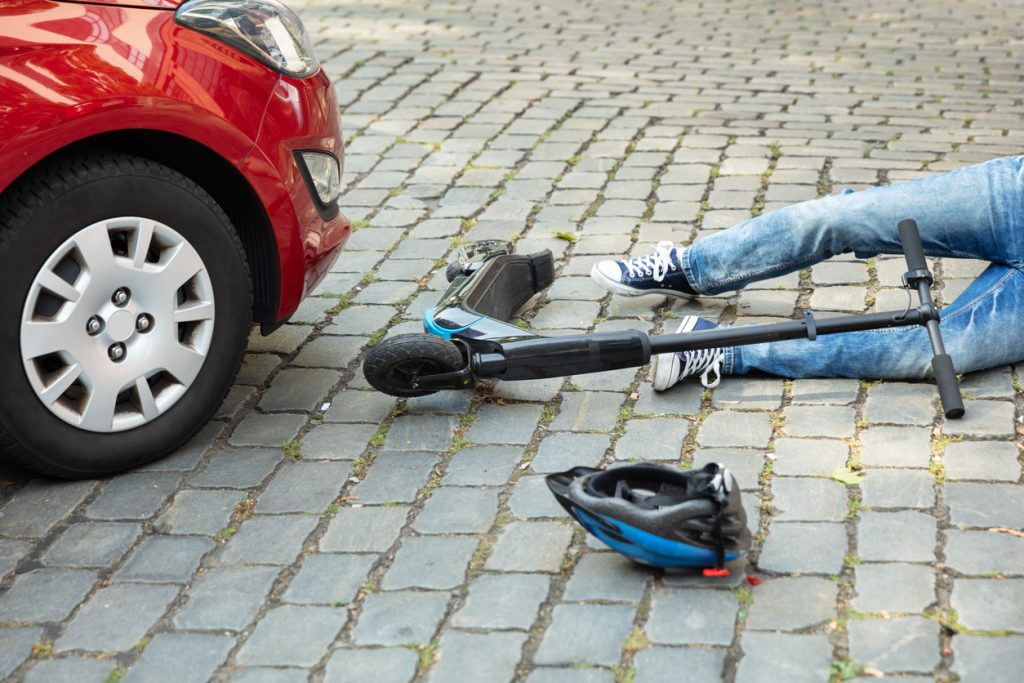
Many electric scooter accidents stem from improper road use or the negligence of a third party. However, there are certain recurring scenarios where the rental company may be partly or fully liable:
One such example includes poorly maintained scooters. If the company fails to perform routine inspections or ignores maintenance reports, they may be liable for resulting injuries.
Another frequent issue is improper deployment. Scooters that are left in unsafe areas—like at the bottom of a steep hill or on uneven pavement—can pose a serious risk to riders. In these situations, the rental company may share fault for failing to ensure safe deployment practices.
Lastly, some accidents result from software malfunctions—including sudden stops or speed surges—that point to negligent programming or lack of quality control. This scenario has given rise to product liability claims in the past.
In each of these examples, scooter company liability in California becomes a key legal question in injury litigation.
Linking Rental Risks to Broader Safety Concerns
The rise in scooter-related injuries has prompted public safety concerns across California. Many cities have started collecting data on crashes, injuries, and fatalities involving scooters. According to the National Library of Medicine, emergency room visits linked to scooter injuries have skyrocketed in the past few years. While some injuries are minor, others result in long-term disability or even death.
Scooter rental companies argue that they provide clear instructions and safe equipment. However, this narrative is challenged by evidence of poor maintenance and vague warning labels. Riders who are injured often face a tough battle in proving fault, especially when the cause is mechanical failure or negligent deployment.
A recent article titled “Accidents Waiting to Happen: The Risks of Renting Electric Scooters” provides a closer look into these hidden dangers. It highlights recurring themes of underregulated deployment and inconsistent safety protocols. The article further emphasizes that without more oversight, these rental scooters may continue to pose substantial risks to both riders and pedestrians. You can read more by following this resource: _Accidents Waiting to Happen: The Risks of Renting Electric Scooters_.
Determining Who Can Be Held Accountable
In the aftermath of a scooter crash, liability may be shared among several parties. These can include the rider, the rental company, a third-party driver, or even the city if poor road conditions played a role.
If the scooter itself was defective or poorly maintained, the rental company may face liability under negligence and strict liability laws. However, if another driver hit the scooter or a pedestrian was injured due to reckless riding, the focus may shift to individual actions.
Claims against scooter companies typically require extensive documentation, including photos, medical records, and witness statements. It’s also important to preserve the scooter in question if possible, as it may serve as critical evidence in proving scooter company liability in California.
Challenges in Holding Companies Accountable
One of the most difficult aspects of these cases is the uphill battle against the legal teams representing scooter companies. These corporations often employ aggressive defense tactics, citing user agreements and pushing for arbitration. In many cases, they also attempt to shift blame onto the rider.
California courts have occasionally pushed back against these strategies, especially when clear evidence of negligence is present. However, the legal process remains complex and time-consuming. Plaintiffs must often go to great lengths to gather evidence and counteract the contractual defenses used by scooter companies.
Moving Toward Accountability and Reform
Several California cities are working toward tighter regulation of scooter operations. These include stricter maintenance requirements, designated parking zones, and clearer guidelines for user safety. Lawmakers are also evaluating whether rental companies should carry broader insurance coverage to protect victims.
Until these reforms become widespread, injured parties must continue to rely on civil litigation to pursue justice. Knowing what evidence to collect and how to navigate user agreements will be essential for those seeking to hold scooter rental companies responsible.
Understanding the legal concept of scooter company liability in California is not just about assigning blame. It’s also about creating safer conditions for future riders and encouraging accountability among the companies that profit from these transportation services.